
Why Ultra Wealthy Collectors Only Invest in Loro Piana Cashmere Suits
Loro Piana Cashmere Suits: The Ultimate Guide to Stealth Wealth & Quiet Luxury
In the stratosphere of ultra-high-net-worth individuals, consumerism transforms into curation. Traditional logocentric branding and artificial waitlists have lost their currency, replaced by a powerful paradigm shift toward stealth wealth and extreme tactile perfection.
At the absolute apex of this movement stands the Loro Piana Baby Cashmere suit. To the untrained eye, it is a meticulously tailored suit in muted earth tones; to the initiate, it represents an investment in an unbranded, closed-loop supply chain that dictates global fiber scarcity.
Why the Global Elite Choose Baby Cashmere
Dismantling the scarcity myth of Capra hircus fiber reveals why collectors ignore standard retail luxury for sub-nineteen-micron Mongolian underfleece tailoring:
- The Psychology of Quiet Luxury: Communicating status exclusively through understated, unbranded perfection rather than loud logos.
- Rarity & Yield: Utilizing ultra-fine 13.5-micron underfleece harvested exclusively once per lifetime from Inner Mongolian Capra hircus kid goats, yielding a mere 30g per animal.
- Vertical Integration: Relying on the structural superiority of a closed-loop Italian supply chain over commercialized luxury alternatives.
The Evolution of Stealth Wealth in 2026
The year 2026 marks a definitive evolution in quiet luxury. Visible logos have become a social liability among the ultra-wealthy, who increasingly prioritize privacy and internal gratification over external validation. This psychology relies on an elite "insider handshake"—a shared aesthetic language where value is recognized through the drape of a shoulder, the subtle luster of natural fiber, and the unique kinetic flow of fabric in motion.
Investing in a baby cashmere suit is fundamentally an exercise in tactile epistemology. The collector values how the garment feels against the skin and how it insulates against the elements without weight. It represents ethical scarcity; true luxury is no longer defined by how many people recognize what you are wearing, but by the profound depth of biological and geographical rarity embedded in every thread.
Micro-Fiber Precision Analysis: Standard cashmere averages roughly 15 microns in diameter, whereas Loro Piana’s baby cashmere undergoes a rigorous sorting mechanism to isolate fibers strictly measuring 13.5 microns. This minute difference represents an exponential increase in softness and insulating capacity, as well as an extreme reduction in weight.
Dismantling the Cashmere Scarcity Myth
To truly appreciate why elite collectors reject standard luxury options, one must dismantle the broad marketing myth surrounding regular Capra hircus fiber. The global fashion market is flooded with products labeled "100% Cashmere," yet the vast majority of these items use fiber harvested from adult goats raised in lower-altitude agricultural zones, resulting in coarse, brittle hairs that pill rapidly and lose shape.
True baby cashmere can only be harvested from the underfleece of the Capra hircus kid goats native to the hyper-harsh, high-altitude climates of Inner Mongolia. Enduring extreme temperature swings, these kid goats develop an incredibly fine, insulating undercoat to survive. This underfleece can only be humanely harvested once in a goat's lifetime—specifically before the animal reaches twelve months of age. The yield is astonishingly low: a single kid goat yields a mere 30 grams of usable underfleece after sorting. When you realize it takes the lifetime yield of nearly nineteen kid goats to weave enough fabric for a single bespoke jacket, the reality of its absolute physical scarcity becomes undeniable.
Dismantling the Cashmere Scarcity Myth
To truly appreciate why elite collectors reject standard luxury options, one must dismantle the broad marketing myth surrounding regular Capra hircus fiber. The global fashion market is flooded with products labeled "100% Cashmere," yet the vast majority of these items use fiber harvested from adult goats raised in lower-altitude agricultural zones, resulting in coarse, brittle hairs that pill rapidly and lose shape.
True baby cashmere can only be harvested from the underfleece of the Capra hircus kid goats native to the hyper-harsh, high-altitude climates of Inner Mongolia. Enduring extreme temperature swings, these kid goats develop an incredibly fine, insulating undercoat to survive. This underfleece can only be humanely harvested once in a goat's lifetime—specifically before the animal reaches twelve months of age. The yield is astonishingly low: a single kid goat yields a mere 30 grams of usable underfleece after sorting. When you realize it takes the lifetime yield of nearly nineteen kid goats to weave enough fabric for a single bespoke jacket, the reality of its absolute physical scarcity becomes undeniable.



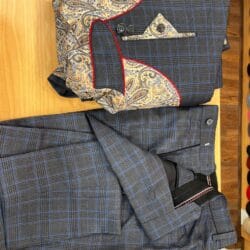
The Closed-Loop Supply Chain & Heirloom Longevity
The obsession among ultra-wealthy collectors is further justified by Loro Piana’s absolute control over its closed-loop supply chain. Unlike standard fashion labels that buy processed yarn from commercial textile brokers, the Italian house operates direct, generational alliances with traditional Mongolian nomadic herders. This guarantees that the sub-nineteen-micron fiber is tracked precisely from the high-altitude combing fields straight to the specialized spinning mills in Piedmont, Italy.
By bypassing traditional middle-tier textile suppliers, they eliminate contamination from inferior grades of wool and preserve the raw mechanical strength of the ultra-fine fiber. This level of meticulous control guarantees a level of durability and performance that transforms an inherently fragile biological asset into a long-lasting heirloom garment capable of retaining its shape, insulation coefficient, and visual fluidity for generations.
"Experience the Art of Bespoke Tailoring"
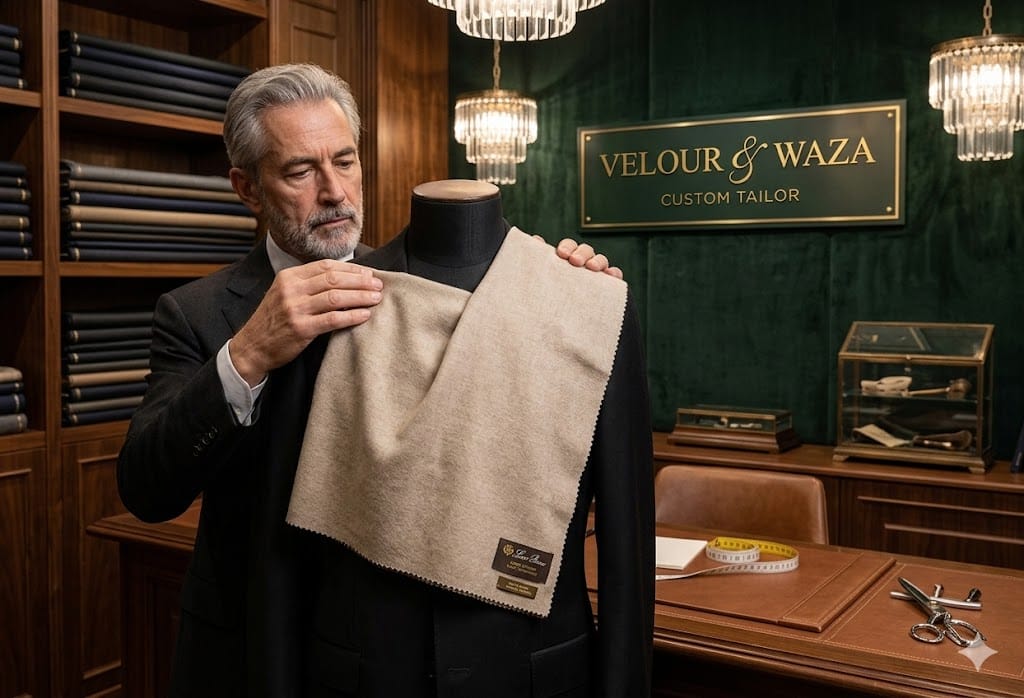
A master-crafted suit is more than a garment; it is an investment in your personal silhouette. At Velour & Waza, we specialize in full-canvas construction that stands the test of time.